Thursday, June 24, 2010

Secularism: The supermarket of Gods


A person or a culture (or a cult) can use any symbolism they want to denote the deity they worship, but that doesn't make the deity they worship "God". For example, a cult could use the symbolism "YHWH" for the deity they worship, but the deity they worship could be some false fantasy they invented. That doesn't make the symbolism itself bad; this hypothetical cult is just using it incorrectly, out of ignorance, out of arrogance, or out of malice.

Analogy: a supermarket is carrying many different brands of cans with the label "split peas" on it, but the F.D.A. after an investigation into the contents discovers that only one of the brands labelled "split peas" actually contains split peas -- all the others contain something else and many of them contain dangerous toxins in addition.

My analogy begins to falter when we try to translate the F.D.A into a comparable institution relating to the problem of which "God" is the real God, and which brand carries the "true God". The world does not have a universally recognized institution like the F.D.A. in my analogy which has the credibility, and the power, to determine which brand has the real "God" and then to enforce a ban on all the brands of false "Gods". What does exist are multiple institutions out there who make the claim and try to provide the service to their consumers (and to potential new consumers) of telling which is the true God.

Complicating this situation, we have many representatives of various religious institutions (and churches) who claim that the "true God" may be present in other religions, though of course usually with the caveat that this presence is not as "complete" as it is in one's own pet brand. Thus the Catholic Church claims in its catechism that Muslims are part of the plan of salvation because they "acknowledge the Creator" and "together with us they adore the one, merciful God..." Essentially what the Catholic Church is saying here is that while Catholic Cola is better than Islamic Cola, both are colas. This ecumenical generosity goes back in Catholic tradition at least as far as Justin Martyr, a 2nd century pagan Greek convert to Christianity who had been trained in classical philosophy before his conversion, and who attempted to find a way to, in effect, save Plato and the other pagan philosophers in light of the Gospel. However, as sophisticated as some of the underpinnings to this catechical tolerance are, they do not mean the Catholic Church from the time of Vatican II to the present has remained immune to PC MC, from whose corrosive influence few if any Christian churches and denominations have escaped.

The reason this secular situation prevails throughout the West -- this situation, or system, of no single universally recognized arbiter of what the "true God" is -- is because the West went through horrible religious wars for centuries, based in great part on the disorder of multiple churches claiming to have the true contents for the same label, and fomenting violence on the basis of this claim because the truth of the claim was then seen to necessitate its enforcement through the laws of the land. But after a while, people of the West could no longer tolerate this situation, and paradoxically an important source of this insight into a new order of secularism drew substance from Judaeo-Christianity itself.

Another way my analogy falters is that in the terms of the secularist "supermarket" of religions, the secularist does not assume the role of an F.D.A. in the sense of shutting down certain religions and removing them from the shelves: secularism allows many different religions with the same label of "God" to co-exist on the shelves, and leaves it up to the consumers to be intelligent enough to decide for themselves.

Secularism basically is a de facto enforcement of "cafeteria spirituality" where no single item is excluded from the menu, and patrons decide for themselves whether to take one item, or mix and match from the religious salad bar. Many Christians may not like this situation, and may pine wistfully for the good old days when they had a monopoly on the franchise. By and large, though, the vast majority of them accept this as a fait accompli. Indeed, many Christians actually support this system of secular tolerance, since many, if not most, Christians have become considerably softened up by PC MC, and quite a few sample from the cafeteria themselves -- going off on Buddhist "retreats", spending the night in Native American sweat lodges to "commune" with the "spirits" of Nature, attending classes of a Hindu swami to "broaden their horizons", participating in "inter-faith seminars" with Muslims. . . One almost senses amongst these cafeteria Christians an embarrassment, if not shame, at being members of a brand name that lays claim to theological superiority, further aggravated by a connection they make between this claim and the ill treatment of non-Western cultures during the colonialist expansion of Christianity.


Speaking of Muslims: They aren't merely dissatisfied with this situation yet acquiesce to it, either grudgingly or enthusiastically, as do the vast majority of Christians. Muslims are programmed through the texts and tradition of their religious culture to reject this arrangement. They are programmed to support the goal of taking control of the "supermarket" by force, and only allowing one brand on the shelves -- Islam. If a Muslim tried to disavow this programming, he would cease being a Muslim qua a follower of Islam. Muslims might, through their system of dhimmitude once they took power, allow the brand called People of the Book a place on some lower shelf near the unswept floor, or perhaps in boxes in the back room somewhere. But pride of place, backed up by powerful teeth, is given to the one and only brand, Islam, which contains the "greater God" (Allah Akbar). When Muslims are weak, they pretend that they just want to get along with all the other brands on the shelves. In the meantime, they are plotting in various ways, including the tactic of terrorism, to try to gain control of the "supermarket of ideas".

The problem is not that Muslims will succeed in their goal of reviving a global theocracy -- it is unlikely they can succeed in such a grandiose goal. The problem is that they want to succeed, and in merely trying to realize that goal, they will manage to wreak untold mayhem and misery unless we wake up and implement various policies calculated to enforce the free market of the supermarket of Gods.

A meditation on political science and "Sharia Courts"


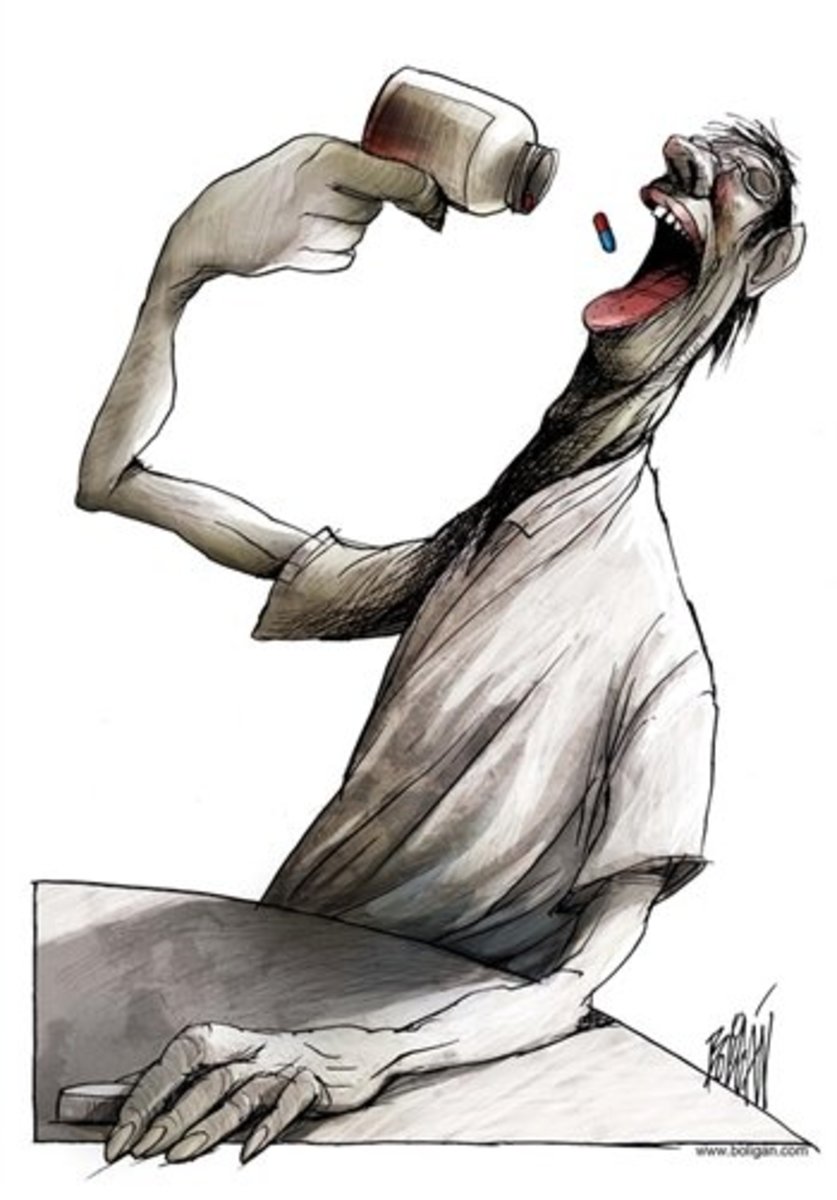
The feature picture today may be unpleasantly ugly, but it is a fitting image and metaphor for the grim and ghoulish eventuality of what portends for any accommodation of Islam, and of Muslims, within the West. As repellant as it is to look at, it is emblematic of the ugliness we the West have to face in the mirror before, apparently, we will begin to change our disastrous attitude and policies about Islam.

According to a recent Jihad Watch notice, a Norwegian politician, Foreign Minister Jonas Gahr Støre rejects the idea of "Sharia courts" in these terms:

We must have a common fundament and a set of values anchored in universal principles of law if we are to succeed...


Practices not part of Norwegian culture shouldn't be able to obtain legitimacy from alternative court systems...

These locutions of "must" and "should" in this context are curious.

The laws of a polity are not about "must" and "should": those kinds of terms belong in the sphere of ethics, not laws. Laws, strictly speaking, pertain to a sphere based in ethics, but beyond ethics: Laws have moved beyond "you must do this because it's good" or "you shouldn't do this because it's bad", to the level of "if you do X society will punish you". The Ten Commandments are not an invitation to debate further: it signals the end of the discussion. Thou Shalt Not, period. The Decalogue brooks no further dialogue.

Now, Norwegian Foreign Minister Støre's locutions might make sense if he were speaking of the meaning of any given particular law, or any given particular moral principle whose translation into future law is being debated. But he's not. He's speaking of the laws themselves -- or more precisely, of the legal sphere itself. He is thus confusing categories. A polity's laws as a whole, considered as the systemic embodiment of the polity itself -- as distinguished from any particular law -- are not up for debate within that polity. The only form that "debate" can take in terms of the polity's laws as a whole, would be revolution or coup d'etat or the extraordinary measure of the emergency imposition of martial law.

It is on this level, then, that people -- including people who should know better (such as Foreign Ministers) -- glibly conceive of the fantasy of "Sharia courts" within a non-Islamic polity. This glib conceit is erroneous whether it is advocated, or whether it is rejected. Both the advocates and opponents are misapprehending the proper categorical issue: A "parallel court system" is, categorically speaking, impossible. It would be a polity within a polity -- a nation within a nation: a state within a state.

There is no such thing in modern Western political science, or perhaps in any, or most, political science of other civilizations, other eras, of a state within a state. There is, in fact, only one civilization (if one can loosely call it that) where such a concept of a state within a state is conceivable and was practiced: Islam. And the alien "state" or "nation" that was politico-legally accommodated within the formal polity was the body of people categorized as dhimmis. In the dhimmitude system, however (and not surprisingly), the extra-legal body-within-a-body did not derive its special laws from itself, but had its laws conferred upon it by the host polity. The underlying principle of separation-within-a-unity was established; however, it was not a politico-legal symbiosis of equals, or of co-dependents, or of two spheres neither of which impinges on the other: it was definitely a unilaterally dependent situation: the polity of dhimmis were parasitical upon the host polity -- but only at the formal indulgence of that host polity as expressed explicitly in the host polity's own laws.

The misapprehension of many Westerners with regard to the prospect of such "Sharia courts", thus, is no mere categorical slip due to illiteracy of legal philosophy and political science: it points to a deeper ignorance of the problem of Islam. These fantasy "Sharia courts" that naive Westerners imagine could be realized would not be spheres subservient legally to the Western host polity's laws: that would be the mirror-image of Islamic dhimmitude. And since Western polities (and Western persons) are not allowed by PC MC to be in a superior relationship to non-Westerners, this would be an impermissible legal-cultural relationship, if it were articulated with coherent clarity. To the degree that this fantasy's fundamentally incoherent and vague substance can be understood, it conceives of essentially two polities existing as one -- a "double state" so to speak, legally and politically equals, yet one: a zygote that, one supposes, is supposed to grow organically into a unified political entity (as the human zygote of ovum and sperm cell grows into a single person). This may work biologically, but when translated into politics -- particularly when one of the two polities enshrines laws that in numerous ways are outrageously antithetical to the laws of the host polity -- it will create not a new life, but a monster.

Furthermore, not only are Islamic laws, considered singly, outrageously antithetical to the laws of any Western polity; the Islamic legal system itself is antithetical to the Western legal system, insofar as Islam rejects as a blasphemy and as a capital crime the Western idea that man creates laws, and mandates the eventual conquest and transformation of any politico-legal sphere that does not submit to Allah and to Muhammad. The "parasitic" system of this fantasy zygote, then, has an internal DNA, so to speak, that encodes the necessity for it to destroy its host and to then dominate -- at that point allowing its formerly dominant host the option of becoming a subservient parasite itself, under dhimmitude, as a dependent shell of its former self, or be destroyed through massacres.


At any rate, such a monster is an impossibility in the Western system, because of the nature of political science. There is no such thing as a "double nation" -- a polity that fuses two polities. Such a new entity would have to be created de novo, as the result of a revolution. It cannot simply materialize through the glibly illiterate imaginations of an ill-educated citizenry.

A Western polity can only politico-legally accommodate a "Sharia court" in imaginative fancy, extra-legally, through casually forgetting the nature of its own laws and legal system. As the old legal saw goes, "Ignorance of the law does not excuse" -- i.e., just because a person didn't know that what he did broke the law, that will not exempt him from punishment. On a grand scale, then, any Western polity that tries to proceed in realizing such a fantasy as a "Sharia court" may get only so far before those more literate tap them on the shoulder and say, "Um, excuse me, but we can't do that." As bad as PC MC is, I have faith that the West is sufficiently healthy to be able to realize, in time, that Islam cannot be accommodated in this way -- not merely that Islam "should not" be accommodated in this way, but simply and literally that it cannot, without breaking the mold of the nature of the Western polity (or, of course, the alternative: becoming conquered by Muslims and thus transformed into an Islamic polity).

The next step in literacy after that would be to realize that such a fantasy accommodation (or its practical alternative, Islamic conquest) is the only way Islam can exist as Islam within the West -- and that those Muslims who seem to be more or less integrating into our sociopolitical fabric are simply, in that respect, not following Islam -- either out of sheer ignorance of their own Islam, or out of sinister motives of infiltration in the hope that someday they will be strong enough to conquer.

For the last 60 years since the immigration of Muslims into the West has been unprecedentedly massive (and continues without abatement currently), the West has had the luxury of imagining that the two "civilizations" can co-exist in a variety of ways -- either that masses of Muslims can simply integrate into the West's politico-legal system, or that fantasy "Sharia courts" can be created -- because the issue has not been pressed in a sufficiently concrete way. We are only beginning to see signs here and there of the issue being pressed, but so far those who bury their heads in the sand are massively encouraged to continue doing so; and make no mistake, even a politician like Norwegian Foreign Minister Støre who rejects "Sharia courts" is in denial about the danger of Muslims, for he rejects "Sharia courts" precisely in the context of continuing to expect, and support, the integration of Muslims into Norwegian society.

And our Westerners in denial have extra motivation because of their PC MC sentimentality about Muslims as
ethnic peoples whose accommodation becomes de rigueur according to the unofficial laws of PC MC which carry a far worse penalty than mere monetary fines or jail time: the accusation (or even the mere perception) of "bigotry".

Wednesday, June 23, 2010

Robert Spencer's response to me, and my response


The feature photograph is not meant to describe Spencer's response itself, but rather the problem of Islam to which in my estimation his prescriptions are inadequate.

In the comments section of a recent article on Jihad Watch (an article that -- with its ghoulish datum of a Muslim man murdering a 5-year-old non-Muslim child and shouting
Allah Akbar! -- stands on the ever-mounting mountaintop of horrible data about Muslims that every month of every year, as inexorably reported by Jihad Watch, grows like monstrous lava atop a volcano), Robert Spencer responds to a comment of mine that asks a rhetorical question about the effectiveness of a prescription he enunciated proferred to help with the problem of Islam.

In his comment in response, Spencer then lists what he argues are false assumptions I have made:

"1. He assumes that I am recommending "calling upon the Muslim community to renounce once and for all any and all teachings involving any kind of violence against Infidels" as my sole and only prescription for the fix we're in"

To be flawed, a prescription doesn't have to be the sole and only one of a number of prescriptions prescribed by the same person: it can remain flawed and irrelevant to the other prescriptions; or it can remain flawed and to one degree or another serve to impede the force of the other prescriptions.

And secondly, just because a person has other prescriptions in tandem, doesn't automatically confer an unproblematic blessing on those other prescriptions. They too have to be analyzed.

"...and thus he thinks that if it fails, we will be even worse off than we were before."

Strictly speaking, it's not a matter of "if it fails, we will be worse off", but a matter, as I presented it in my first post above, of its inadequacy. I analyzed the problem and asked the obvious rhetorical question being implicitly begged by the prescription. However, that said, in the all-too-real context the West is in now, with millions of Muslims both being born in the West and immigrating into the West over a span of a century (from 1950 to 2050), time is not on our side, and the longer we wait to take the measures we will have to take anyway when the shit hits the fan, the messier, costlier and bloodier those measures will be. I see no reason not to aggressively push ahead of the curve to try to get our grandiosely pathetic U.S.S. & H.M.S. PC MC turned away from its lumbering course toward the iceberg whose ghastly Islamic tip only a few of us can see now. Paradigm shifts don't happen by themselves; they require people to push for them.

"2... This assumption is belied by the fact that I have on many occasions called for law enforcement and government authorities to demand "transparent and inspectable" programs in mosques and Islamic schools teaching against jihad and Islamic supremacism. Inspectable is a clumsy nonce word that I use despite its clumsiness, because it conveys what I want to convey: that the Islamic community should be made to institute open and transparent and honest programs that are regularly inspected by informed Infidel authorities."

There are some problems with this prescription:

a) "the Islamic community should be made" -- how do you make a community do something -- particularly something that insults them and that blatantly implies they are under suspicion? One assumes there would be legal penalties, and if further refusal to comply occurs, that physical violence ensues (i.e., law enforcement personnel physically take them to jail -- and worse, if further refusal/resistance occurs).

b) The prescription presumes, and seems to accept, an ongoing significant presence of Muslims and Islamic institutions throughout the West. But Muslims demographically and ideologically are not a static population. Meanwhile, Spencer's prescription to halt immigration of new Muslims is not going to be heeded any time soon. From all indications of the continuing persistence of PC MC throughout the West -- and the indeed increasing deference for and defense of Muslims by Westerners in government, news media, schools and pop culture -- it is reasonable to estimate that the West won't even begin even to contemplate such a radical prescription for another 25 years at least (though 50 years is really more realistic, unfortunately). Thus, the particular prescription of trying to manage the Islamic presence in the West which is dynamic and not static tends to have the effect of accommodating a fait accompli rather than pushing for the intolerance that should be our goal.

c) For a society to be prepared to treat Muslims in general like this -- treating their central and major institutions as suspicious and potentially dangerous enough to be regularly inspected and forcing them to comply -- that society would have had to have woken up to the problem of Islam far beyond what they manifest now throughout the West. Having woken up to that degree, they would see that the problem of the danger of Muslims is sufficiently dynamic and volatile (further exacerbated by their obsessively fanatical adherence to a blueprint for organized violence of various flavors with the goal of conquest) as to render such a prescription inadequate.

d) Not only will such a prescription be inadequate, from everything we know about Muslims, it is reasonable to expect that it will inflame and exacerbate their animosity against us and hence their seditious activities we are trying to manage with a stopper ill-fitted to the volatile pressure cooker it is trying to control.

...as I have stated many times, Islamic reform, while theoretically possible, is almost certainly not going to happen, or not within our lifetimes.

A person may state that they believe this claim, but that doesn't mean that person isn't going to state other things that tend to undermine, or even contradict, the force of this claim.

Right now Islam is solely recognized in the public square as a religion, and indeed, a "victim" one at that. And that leads me to "Hesperado"'s third false assumption:

3. He assumes that when I call for such programs, I am talking to the Islamic community. Actually, I make the call for the sake of non-Muslims, so that they might realize that something they may take for granted as existing is actually lacking, and start to think about the implications of that.

That by itself is fine, if it will have the desired effect, and if it will have no other parallel effects that tend to retard the process of the West's reawakening. It tends to have the latter, I maintain, insofar as it reinforces a kind of middle state of quasi-tolerance between the two positions of PC MC tolerance of Islam on the one hand, and on the other hand, of appropriately rational Intolerance of Islam. That middle state, I maintain, is incoherent, because the nature of the beast, once it is known by the autodidactic Western, demands complete intolerance, not some elaborate combination of intolerance and tolerance: viz., it's ok to have masses of Muslims continuing to exist and flourish (and, necessarily, aggrandize, if only in perforce stealthier mode) throughout the West, but we need to regularly inspect their institutions and perhaps also the private records of innumerable lay Muslims among them, and we also need to stop their brothers and sisters from immigrating into the West. What makes their brothers and sisters who are trying to immigrate any worse than the home-grown citizen-Muslims we have now and will have more of in 50 years?

Conclusion:

A train wreck is coming, and measures like Spencer's and of other Glazovians will turn out to be too little, too late. While I have hope that the West will put the brakes on Islam before an absolute and complete catastrophe happens, nothing short of putting on those brakes is appropriate for this impending train wreck.
Measures like Spencer's and of other Glazovians are all calculated to avoid putting on the brakes; but they will only end up deferring the inevitable: and the longer we wait to do it, the worse the casualties will be on our side, and the messier, costlier and bloodier will be that wreck when it finally devolves.

Monday, June 21, 2010

Playing Six Degrees of Separation from Sayyid Qutb


Recently, a journalist named Adam Serwer attempted
an argument against those who object to the Ground Zero Mosque. In one part of his attempted argument, Adam Serwer does have a point, though it is somewhat obscured by his sloppy locution:

"Why bother trying to play six degrees of Sayyid Qutb if you ultimately believe all Muslims are terrorists anyway?"


The sloppy part is the T word ("terrorists").

That aside, it is a point made valid by the continuing incoherence of the Anti-Islam Movement (such as it is).

The incoherence in question involves a fiddling back and forth between two stances:

1) massively implying that Islam itself and by logical consequence all Muslims who support Islam (and how many Muslims don't support Islam? and even if there existed such a strange animal, how would we identify and locate it?) are to be condemned as antithetical, yea positively deadly, to our societies;

and

2) explicitly at every point shrinking back from the boldly universal stance of #1 in order to attempt to parse some kind of localized condemnation of this, that and the other Muslim, or this, that and the other Islamic institution, or this, that and the other Islamic country.

Part and parcel with this basic incoherence is a curious incomprehension most in the Anti-Islam Movement (such as it is) persist in indulging -- namely, while on the one hand they massively imply the universal stance of #1, they scratch their heads in bafflement as to why people recoil from their implication. One reason for this bafflement so common among those in the Anti-Islam Movement (such as it is) is that they apparently sincerely believe in the softer stance of #2 and will not, or cannot, take intellectual responsibility for the implication of #1 they are otherwise, without even really realizing it, massively defending.

I say it's time for us in the Anti-Islam Movement (such as it is) to stop fiddling with loopholes and wiggle room afforded by the simultaneous presentation of the Large Print Giveth of Condemnation of Islam & Muslims, on the one hand and, on the other hand, the Small Print of Finding Muslims to Save From Our Condemnation.

Sometimes this other hand of the Small Print is motivated by a concern to avoid the wrath of our PC MC masters; other times it is motivated by a sincere disinclination -- if not a moral repugnance -- to condemn an entire People and their culture. More often than not, it seems to be an incoherent melange of both.

The Adam Serwers of the world (and they continue to outnumber us) have a point when, in so many words, they ask of us -- "Are you against the Ground Zero Mosque because the friend of a friend of a cousin of a nephew of its proponent, Imam Rauf, was a supporter of the Muslim Brotherhood? Or are you against it because it's an Islamic mosque and because Imam Rauf is, simply... a Muslim...?"

Too many in the Anti-Islam Movement (such as it is) waffle back and forth between these two. Let's stop playing Six Degrees of Separation. The shortest distance between two points is a line -- but too many dots complicate the trajectory. The two points are, in this instance:

Islam --> Ground Zero Mosque.

And:

Muslim --> Imam Rauf.

And what is still implicit needs to be rendered explicit:

Islam and Muslim: Unacceptable.

"Let not thy right hand know what thy left hand is doing"
may be a sound principle in in its original context of Christian charity -- but in the context of our primary concern, the safety of our societies, it becomes a most uncharitable dictum.

Saturday, June 19, 2010

One nice nail in the "German Nazism was Christian" canard


I recently came across this interesting historical tidbit. Apparently, the Hitler Youth Movement had a chant they regularly sang. The lyrics to this chant are posted in various places on the Blogosphere in French.

Here are the lyrics to the chant, translated from the French (which, obviously, must have been translated from the German):

We are the joyous Hitler Youth,

We have no need of your Christian virtues,

for our Fuhrer Adolf Hitler is now our Mediator.
No vile clergyman can prevent us from being the children of Hitler.

It is not Christ whom we follow, but Horst Wessel...

We follow him while singing dressed in Hitlerian raiment,
and only then are we worthy of our ancestors.
I am neither Catholic nor Christian,

I go with the S.S., wherever she flies.
You can take the Church away from me,
the Hooked Cross -- the Swastika -- makes me blessed on Earth:
I will follow it step by step.
Baldur von Schirach, lead me!

Notes:

Re: the two names referenced in the chant: Horst Wessel was a young member of the S.S. who died in 1930 fighting against communists; Baldur von Schirach was leader of the Hitler Youth.


Caveat Lector:

Unfortunately, as with most factoids in the Blogosphere, the documentation is not quite up to snuff. The closest I could get to pinning down the source was from
a blog that notes that the chant was "cited in Hubert Wolf, Le pape et le diable, Paris, éditions du CNRS, 2007, p. 236." This is certainly better than nothing, but reveals once again the poor education, apparently, of bloggers. What requires citation here is a primary source, not a reference to a secondary source. If Hubert Wolf employed any elementary scholarly methodology, then he would have cited the primary source; and if the blogger who cited Wolf actually had his hands on Wolf's book, then he should have also provided the primary source citation which Wolf provided there. Also helpful would have been the German original (which Wolf, again, would have provided if he had employed any elementary scholarly methodology).

Wednesday, June 16, 2010

Robert Spencer: From Wilsonianism to Glazovianism


In a recent Jihad Watch notice, Robert Spencer wrote:

I don't subscribe to Wilsonian pipe dreams of bringing democracy to the benighted masses, and in reality there is little one can or should do for the oppressed if they do indeed love their oppression and wish to remain under its boot...

Then added:

...but the fact remains that I am not "anti-Muslim."

In unpacking what it means to be "not anti-Muslim", Spencer went on:

Some years ago here at Jihad Watch I had an exchange with an English convert to Islam. I said: "I would like nothing better than a flowering, a renaissance, in the Muslim world, including full equality of rights for women and non-Muslims in Islamic societies: freedom of conscience, equality in laws regarding legal testimony, equal employment opportunities, etc." Is all that "anti-Muslim"?

Now, Spencer added that his Muslim correspondent considered that all these, well, neo-Wilsonian ideals, were in effect anti-Muslim; for he reported that his correspondent answered:

"So, you would like to see us ditch much of our religion and, thereby, become non-Muslims."

And Spencer observed:

In other words, he saw a call for equality of rights for women and non-Muslims in Islamic societies, including freedom of conscience, equality in laws regarding legal testimony, and equal employment opportunities, as a challenge to his religion.

But from that astute observation, Spencer then lurched in the wrong direction:

To the extent that they [i.e., these neo-Wilsonian ideals] are [a challenge to his correspondent's Islam], these facts have to be confronted by both Muslims and non-Muslims.

No, they don't "have to be". Only things that reasonably could be, are things about which we can demand, or expect, that they "have to be". There are some things in life that will reasonably never happen -- you know, the usual litany of Miss Universe Ideals: an end to war, an end to all hunger, an end to disease, an end to all animal abuse, an end to old age; etc. To which we can add, an end to Islamic Muslims.

And Spencer in the same quote continued to elaborate and defend his Wilsonianism which at the beginning he had declared to be a pipe dream:

But it is not "anti-Muslim" to wish freedom of conscience and equality of rights on the Islamic world -- quite the contrary.

Conclusion:

My title is not meant to be literal, but ironic: In fact, there is no real evolution or change from Wilsonianism to Glazovianism. The latter is a term I developed to describe that particular type of unreasonable hopefulness about the expectation of a reformation of Islam among Muslims that would be of a sufficient magnitude to solve our problem which their Islam, through themselves as carriers and agents, is causing us. That unreasonable hopefulness may manifest shadings in degree which can be plotted along a spectrum, from the most extreme (the Pipes Dream), to the slightly less extreme musings of our eponymous Jamie Glazov, to the more boldly vague recommendations of Geert Wilders, to the somewhat more realistic -- but therefore that much less coherent -- non-positional position of Spencer.

While I have noted Spencer's Glazovianism before (cf. my now retired blog Jihad Watch Watch), I still found it rather breathtaking that in the same breath, Spencer rejects Wilsonianism and then immediately launches into a defense of... Wilsonianism.

Tuesday, June 15, 2010

The Abstract and the Concrete


In a recent analysis of a critical review of Ayaan Hirsi Ali's new book, Nomad, published in the New Yorker, Spencer notes:

...as the new saying goes, "Muslims are the new Jews." There is just one problem with this ghastly equation, which trivializes the mass-murders of Jews in Europe and defames Hirsi Ali: Jews never carried out terrorist attacks in Europe, and never boasted about how they were one day going to take over...


Implicit in this elementary fact which PC MC ignores is a principle which Spencer leaves unarticulated, but which I hope those in the Anti-Islam Movement support: namely, that if any group -- no matter how large or small, no matter how ostensibly religious or not, no matter how ethnic or not -- were to do and say what Muslims are doing and saying (and have been doing and saying for centuries), we in the Anti-Islam Movement would feel the same about them.

Let's use more direct language to bring that principle into acute clarity:

If, for example, Jews were doing and saying what Muslims are doing and saying, we would now have an Anti-Jewish Movement. Or, if Christians were doing and saying what Muslims are doing and saying, we would now have an Anti-Christian Movement. Or, if Hindus were doing and saying what Muslims are doing and saying, we would now have an Anti-Hindu Movement. There should be no group in the world immune from this principle.

I.e., the reason we are not Anti-Jewish (or Anti-Christian, etc.) is not because of some abstract axiom we hold that could never be contravened by evidence, but by our adherence to concrete facts. Simply put, Jews (or Christians, etc.) are not doing and saying what Muslims are doing and saying -- and, importantly, show no signs either in their behavior or in their subcultures of ever doing and saying what Muslims are doing and saying.

Some of us may wish to comfort ourselves with the conviction that this fact about Jews (or Christians, etc.) reflects an immutable abstract axiom, but that conviction should not be erected over against the principle I have articulated and advocate, for the flip side of my argument is that this principle demonstrates that we are not against Muslims simply because they are Muslims, or out of some abstract animus of bigotry or irrational hatred, or (alas) out of some eschatological blueprint -- but simply because of what they are concretely saying and doing (and have been doing and saying for centuries).

Now, it could be further argued that what Muslims are saying and doing (and have been doing and saying for centuries) reflects a strange and unique essence -- psychologically, sociologically and spiritually -- that could, and will, never change; but that would be an ontological question, which should be carefully distinguished from the pragmatic problem of simply attending, and responding, to the concrete behaviors and expressions of Muslims.

As the West reawakens to the problem of Islam in the decades of this new 21st century, we may well find that our pragmatic responses to what Muslims are saying and doing would, practically speaking, resemble a response to an ontological essence; but again, that should never distract us from our attention to the data, and we should never let our actions be primarily guided by some abstract axiom. Indeed, PC MC today represents precisely an abstract axiom -- but one which is preventing the West from attending to the data of Muslims in a rational way.

Monday, June 14, 2010

The corner Robert Spencer paints himself into


In a recent notice on Jihad Watch, Robert Spencer wrote of the ideas derived from Sharia law:

"Either we allow the propagation of such ideas in the U.S. or we don't."

Surely, Spencer must know that the U.S.A. does not forbid the propagation of any ideas, including those of the Communist Party, the KKK, neo-Nazis, Satanists, etc. While three or four European countries have developed limited policies of making the propagation of certain ideas illegal -- usually incurring fines or even jail time -- such as the propagation of Holocaust denial, or more vaguely "hate speech" (e.g., the actress Brigitte Bardot, who has been fined by the French government more than once for "hate" against Muslims in one or more books she wrote), this tendency is by no means dominant in Europe and it has tended to operate amid much internal debate, tension and dissension from critics. Canada also has "hate speech" laws, and seems to be worse than the European countries that have them -- though, of course, the "hate speech" laws seem to be unilaterally applied according to the PC MC Dogma of Reverse Racism, and for that reason never seem to apply to the hate speech which Muslims endemically deploy through expressing the tenets of their Islam.

If Spencer's sentence was not just a sloppy slip, I think it's explained by the somewhat incoherent corner he paints himself into with one aspect of his theory of stealth jihad -- viz., the aspect that tends to disconnect violent jihad from stealth jihad and thus tends to see the latter as in and of itself dangerous. But society is not endangered by a group that propagates ideas about the merits of the subjugation of women and of other minority groups, and of the merits of draconian punishments for crimes, and of the merits of harsh penalties for religious blasphemy, and so forth -- if that group never intends to use violence to further their aims. If a modern democratic society voluntarily chooses the path of accepting and implementing such pernicious ideas, then it deserves them. But no modern democratic society will ever voluntarily accept and implement the pernicious ideas in Sharia Law, when the rubber meets the road. We will have to be forced to do so -- through violence.

For now, modern democratic societies of the West are playing an irresponsible game half-wittingly countenancing such pernicious ideas of Islam out of a confused sense of wishing to be "tolerant" and out of an anxiety that seeks to avoid being "bigoted" against a worldwide People and their central culture, perceived to be ethnic. Precisely because things have not come to a head, this clash of Western liberalism and Islamic Sharia remains in a state of limbo and so the PC MCs as yet have never had to face the responsibility of the actual concrete choice between the anti-liberal ideas of Islam, and a defense of their own Western liberal ideas of how to organize society. That confrontation can only occur through the medium of violence, when Muslims try to force their ways on us, which, because they will remain militarily weak, they will continue to pursue through the roundabout tactics of various forms of terrorism and threats of terrorism.

Spencer's somewhat incoherent stance on stealth jihad vis-a-vis violent jihad is also related to the incoherence he shares with Geert Wilders and Pam Geller, among many others in the still inchoate Anti-Islam Movement -- namely, the incoherence that tries simultaneously to condemn Islam while claiming they they are not against Muslims per se and may even aver that most Muslims are harmless. This incoherence seems to rest on a curious myopia to the fact that any given Muslim is Islam personified, is Islam activated, is Islam realized. The only way to attenuate this fact is to then come in out of left field with various theories about how "most Muslims don't know their Islam", or "most Muslims are really lax and don't follow their Islam", or "many Muslims practice an enlightened moderate form of Islam", or any number of other ways by which one tries to superimpose Western mores upon Muslims, as though the historical process that has massaged Western Jews and Christians into a state of predominant secular relaxation must necessarily also apply to the majority of Muslims.

One suspects that behind Spencer's incoherence on these matters lurks a liberal anxiety to avoid bigotry against Muslims. Since Spencer is more knowledgeable about the danger, injustice and evil of Islam than your garden-variety liberal, this sets up a paradoxical tension in his thought, and whenever the subject comes up (which is far less often now than it was in years past, as documented and analyzed in various essays I wrote for my now retired blog Jihad Watch Watch), Spencer's formulations tend to go into contortions, because he is trying to balance, and defend, two mutually contradictory theses:

1) Islam is dangerous, unjust and evil

2) Most Muslims are harmless, and maybe even good, people.

This paradox is inherent to the asymptotic analysis to which Spencer tends to subscribe -- for asymptotic analysis with regard to the problem of Islam derives from PC MC. Ironically, one consequence of these contortions caused by Spencer's inherent liberalism is that most illiberal proposal quoted at the head of my essay above.

Friday, June 11, 2010

"The Constitution is not a suicide pact."

http://www.laprogressive.com/wp-content/uploads/2013/05/Suicide-Pills-Medication-350px.jpg
This phrase "the Constitution is not a suicide pact" misleads, because it assumes that taking actions against Muslims collectively would always be un-Constitutional: i.e., that phrase assumes that circumstances can arise where the nation bound by its constitution has to take extra-Constitutional measures.

However, there are three contexts in which all democracies (whether they be democratic republics or not) routinely behave in ways that go against their constitutions -- or, more precisely, all democratic constitutions have provisions for the reality of imperfection and evil, since they are not utopian.

The three contexts in which all democracies routinely circumvent their constitutions are with respect to:

1) criminals

2) enemy combatants

3) terrorists.

What gives the right of the state in a democracy or democratic republic to compel any of its citizens to pay money in fines for a crime, or worse to go to prison, is that that citizen, by committing a crime, has to a certain degree forfeited his Constitutional protections as a citizen.

What gives the right of the state in a democracy or democratic republic to break down doors, commandeer personal homes, offices, or whole buildings, forbid access to public spaces -- when there occurs a major danger to the public such as an unseen sniper killing people in a crowded public place? Obviously, the exigency of protecting the public and stopping that sniper give the state the right to suspend the Constitutional rights of various citizens in that vicinity.

Similarly in various cases involving citizens who collude with an enemy, or who become terrorists.

This is all routine, it is not extraordinary.

Occasionally, the routine rises to a level so singular, it seems extraordinary, but remains within the realm of the ordinary nonetheless -- as for example FDR's ruling to round up and inter American citizens who were Japanese (or Italian or German). In doing so, FDR and the Congress did not "break" the Constitution: they simply took advantage of the universal provision in any democratic constitution for treating certain citizens as hostiles and thus as having forfeited certain aspects of their Constitutional protections. The question in such circumstances is not whether a given citizen can ever be treated as a hostile who has forfeited certain aspects of his Constitutional protections -- with an implicit answer of "never" to the rhetorical question. The question, rather, is casuistic: Has this particular citizen committed acts or is he suspected of collusion with the commission of acts that can be categorized as Criminal or Seditious? If yes, then that opens the way to treating them in ways that forfeit certain aspects of their Constitutional protections.

What makes the Muslim Problem singular has nothing to do with the Constitution, but rather the fact that we are dealing with a worldwide People and the complex issue of enablement that has massive appearances of ostensible innocence or non-relation to the process in their culture of producing hostiles against us. Further complicating this is the fact that most of the members of this People are perceived to be ethnic, and this pushes psychological and sociocultural buttons in our society because of PC MC which has unofficially, but powerfully, ruled that no substantive criticism -- let alone condemnation and then policy actions taken -- is permitted against any ethnic people.

So yes, the Constitution is not a suicide pact -- in the sense that the Constitution has built-in provisions for protecting the society it legally structures from dangerous enemies in ways that go against, or beyond, its explicit provisions that guarantee rights to its citizens.

Thursday, June 10, 2010

A Stealth Jihadist par excellence


I don't normally reprint someone else's article here, but this one that I came across is so good I couldn't resist.

It's about a multi-millionaire Turkish Muslim named Fethullah Gulen. When the reader carefully assimilates the following article, I am confident that he will realize the grand proportions of a veritable stealth jihad pursued by this nefarious individual. Here follows the full text of the article, by Rachel Sharon-Krespin, published in the Middle East Quarterly (Winter 2009, pp. 55-66):

As Turkey's ruling Justice and Development Party (Adalet ve Kalkınma Partisi, AKP) begins its seventh year in leadership, Turkey is no longer the secular and democratic country that it was when the party took over. The AKP has conquered the bureaucracy and changed Turkey's fundamental identity. Prior to the AKP's rise, Ankara oriented itself toward the United States and Europe. Today, despite the rhetoric of European Union accession, Prime Minister Recep Tayyip Erdoğan has turned Turkey away from Europe and toward Russia and Iran and reoriented Turkish policy in the Middle East away from sympathy toward Israel and much more toward friendship with Hamas, Hezbollah, and Syria. Anti-American, anti-Christian, and anti-Semitic sentiments have increased. Behind Turkey's transformation has been not only the impressive AKP political machine but also a shadowy Islamist sect led by the mysterious hocaefendi (master lord) Fethullah Gülen; the sect often bills itself as a proponent of tolerance and dialogue but works toward purposes quite the opposite. Today, Gülen and his backers (Fethullahcılar, Fethullahists) not only seek to influence government but also to become the government.
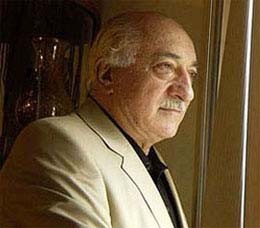
In 1998, Fethullah Gülen left Turkey for the United States, reportedly to receive medical treatment for diabetes. Since his voluntary exile, Gülen has resided on a large, rural estate in eastern Pennsylvania, together with about 100 followers, who guard him and tend to his needs. It is from his U.S. base that Gülen has built his fame and his transnational empire.

Today, Turkey has over 85,000 active mosques, one for every 350 citizens—compared to one hospital for every 60,000 citizens—the highest number per capita in the world and, with 90,000 imams, more imams than doctors or teachers. It has thousands of madrasa-like Imam-Hatip schools and about four thousand more official state-run Qur'an courses, not counting the unofficial Qur'an schools, which may expand the total number tenfold. Spending by the governmental Directorate of Religious Affairs (Diyanet Işleri Başkanlığı) has grown five fold, from 553 trillion Turkish lira in 2002 (approximately US$325 million) to 2.7 quadrillion lira during the first four-and-a-half years of the AKP government; it has a larger budget than eight other ministries combined.[1] The Friday prayer attendance rate in Turkey's mosques exceeds that of Iran's, and religion classes teaching Sunni Islam are compulsory in public schools despite rulings against the practice by the European Court of Human Rights (ECHR) and the Turkish high court (Danıştay).[2] Both Prime Minister Erdoğan and the Diyanet head Ali Bardakoğlu criticized the rulings for failing to consult Islamic scholars.

Gülen now helps set the political agenda in Turkey using his followers in the AKP as well as the movement's vast media empire, financial institutions and banks, business organizations, an international network of thousands of schools, universities, student residences (ışıkevis), and many associations and foundations. He is a financial heavyweight, controlling an unregulated and opaque budget estimated at $25 billion.[3] It is not clear whether the Fethullahist cemaat (community) supports the AKP or is the ruling force behind AKP. Either way, however, the effect is the same.

Gülen's Background

Born in Erzurum, Turkey, in 1942, Fethullah Gülen is an imam who considers himself a prophet.[4] An enigmatic figure, many in the West applaud him as a reformist and advocate for tolerance,[5] a catalyst of "moderate Islam" for Turkey and beyond. He is praised in the West, especially in the United States, as an intellectual, scholar, and educator[6] even though his formal education is limited to five years of elementary school. After receiving an imam-preacher certificate, he served as an imam, first in Erdirne and later in Izmir. In 1971, the Turkish security service arrested him for clandestine religious activities, such as running illegal summer camps to indoctrinate youths, and was, from that time on, occasionally harassed by the staunchly secular military.[7] In 1981, he formally retired from his post as a local preacher.

To build an image as a proponent of interfaith dialogue, Gülen met Pope John Paul II, other Christian clergy, and Jewish rabbis[8] and emphasizes the commonalities unifying Abrahamic religions. He presents himself and his movement as the modern-day version of tolerant, liberal Anatolian Sufism and has used the literature of great Sufi thinkers such as Jalal ad-Din Rumi and Yunus Emre, pretending to share their moderate teachings.[9] Quotes from their teachings adorn Fethullah's Gülen's propaganda material. The movement, its proxy organizations, and universities—including Georgetown, to which it donates money—hold conferences in the United States and Europe to discuss Gülen. In October 2007, the British House of Lords feted Gülen with a conference in his honor.

Gülen was a student and follower of Sheikh Sa'id-i Kurdi (1878-1960), also known as Sa'id-i Nursi, the founder of the Islamist Nur (light) movement.[10] After Turkey's war of independence, Kurdi demanded, in an address to the new parliament, that the new republic be based on Islamic principles. He turned against Atatürk and his reforms and against the new modern, secular, Western republic.

In 1998, Gülen departed for the United States, reportedly to receive medical treatment for diabetes. However, his absence also enabled Gülen to escape questioning on his indictment in 2000 for allegedly promoting insurrection in Turkey in a series of secretly-recorded sermons. Since his voluntary exile, Gülen has resided on a large, rural estate in eastern Pennsylvania, together with about 100 followers, who guard him and tend to his needs. These servants are educated men who wear suits and ties and do not look like traditional Islamists in cloaks and turbans. They follow their hocaefendi's orders and even refrain from marrying until age fifty per his instructions. When they do marry, their spouses are expected to dress in the Islamic manner, as dictated by Gülen himself.[11] It is from his U.S. base that Gülen has built his fame and his transnational empire.

Gülen's Education Network

The core of Gülen's network is his educational institutions. His school network is impressive. Nurettin Veren, Gülen's right-hand man for thirty-five years, estimated that some 75 percent of Turkey's two million preparatory school students are enrolled in Gülen institutions.[12] He controls thousands of top-tier secondary schools, colleges, and student dormitories throughout Turkey, as well as private universities, the largest being Fatih University in Istanbul. Outside Turkey, his movement runs hundreds of secondary schools and dozens of universities in 110 countries worldwide. Gülen's aim is not altruistic: His followers target youth in the eighth through twelfth grades, mentor and indoctrinate them in the ışıkevi, educate them in the Fethullah schools, and prepare them for future careers in legal, political, and educational professions in order to create the ruling classes of the future Islamist, Turkish state. Taking their orders from Fethullah Gülen, wealthy followers continue to open schools and ışıkevi in what Sabah columnist Emre Aköz called "the education jihad."[13]

The overt network of schools is only one part of a larger strategy. In a 2006 interview, Veren said, "These schools are like shop windows. Recruitment and Islamization activities are carried out through night classes ... Children whom we educated in Turkey are now in the highest positions. There are governors, judges, military officers. There are ministers in the government. They consult Gülen before doing anything."[14]

The AKP's controversial education policies, coupled with the Islamist indoctrination in Fethullahist schools, have accelerated the Islamization of Turkish society. During AKP's first term in government, the Erdoğan government has changed textbooks, emphasized religion courses, and transferred thousands of certified imams from their positions in the Directorate of Religious Affairs to positions as teachers and administrators in Turkey's public schools.[15] Abdullah Gül, Turkey's first Islamist president and a Gülen sympathizer, appointed a Gülen-affiliated professor, Yusuf Ziya Özcan, to head Turkey's Council of Higher Education (Yükseköğretim Kurulu, YÖK). He has also used his presidential prerogative to appoint Gülen sympathizers to university presidencies.

Beyond Turkey, the Fethullahist schools also serve as fertile recruiting grounds. In his Institut d'Etudes Politiques doctoral thesis on Gülen schools in Central Asia, Bayram Balcı, a French scholar of Turkish origin, wrote, "Fethullah's aim is the Islamization of Turkish nationality and the Turcification of Islam in foreign countries. Dozens of Fethullah's ‘Turkish schools' abroad—most of which are for boys—are used to covertly ‘convert,' not so much ‘in school,' but through direct proselytism ‘outside school.'" Balcı explained, "He wants to revive the link between state, religion, and society."[16] The schools of Gülen's Nur movement in Central Asia have worked to reestablish Islam in a region largely secularized by decades of Soviet control. Balcı explained, "The aim of the cemaat is to educate and influence future national elites, who will speak English and Turkish and who will one day prove their good intentions towards Fethullahists and towards Turkey." Several countries in the region have taken steps against Gülen's educational institutions because of such suspicions. Uzbekistan has banned the schools for encouraging Islamic law,[17] and the Russian government, weary of the movement's activities in majority Muslim regions of the federation, has banned not only the Gülen schools but all activities of the entire Nur sect in the country.[18]

Neither Uzbekistan nor Russia are known for their pluralism, but suspicion about Gülen indoctrination has spread even to more permissive societies such as that of the Netherlands. In 2008, members of the Netherland's Christian Democrat, Labor, and Conservative parties agreed to cut several million euros in government funding for organizations affiliated with "the Turkish imam Fethullah Gülen" and to thoroughly investigate the activities of the Gülen group after Erik Jan Zürcher, director of the Amsterdam-based International Institute for Social History, and five former Gülen followers who had worked in Gülen's ışıkevi told Dutch television that the Gülen community was moving step-by-step to topple the secular order.[19] While the organizations in question denied any ties to the Gülen movement, Zürcher said that taqiya, religiously-sanctioned dissimulation, was typical in the movement's interactions with the West. An unnamed former Gülen follower who also once worked in Gülen schools and ışıkevi reported that Fethullahists called the Dutch "filthy, blasphemous infidels" and that they said "the best Dutchman is one who has converted to Islam. All the Dutch must be made Muslims."[20] Indeed, of the thousands of Fethullahist schools in more than one hundred countries that allegedly teach moderation, none are located in countries such as Saudi Arabia or Iran that exist under domineering strains of official Islam, and most appear instead geared to radicalize students in secular Muslim and non-Muslim societies.

Eviscerating Checks and Balances

Fethullahists have also made inroads into Turkey's 200,000-strong police force. Their infiltration has had a compounding effect, as Fethullahist officials have purged officials more loyal to the republic than the hocaefendi. According to Veren, "There are imam security directors; imams wearing police uniforms. Many police commissioners get their orders from imams."[21] Adil Serdar Saçan, former director of the organized crimes unit within the Istanbul Directorate of Security, confirmed these statements in reports he prepared on the Fethullahist organization within the security apparatus. In a 2006 interview, he said,

Fethullahists began organizing inside the security apparatus in the 1970s. In police academies, students were being taken to ışıkevi by class commissioners. One of those commissioners is now the director of intelligence at the Turkish Directorate of Security. During my time at the [police] academy, those in the directorate who did not have ties to the [Gülen] organization were all pensioned off or fired in 2002 when the AKP came to power. … I was at the top of my class when I graduated from the police academy, and throughout the twenty-four years of my career, I maintained and was honored for my stellar record. After 2002, the AKP blocked my promotions. They promoted only those officers whose files were tainted with allegations that they were engaged in reactionary Islamist activities. … Belonging to a certain cemaat has become a prerequisite for advancement in the force. At present, over 80 percent of the officers at supervisory level in the general security organization are members of the [Gülen] cemaat.[22]

Such statements, however, may have consequences.[23] In October 2008, Turkish police arrested Saçan on suspicion of involvement in the so-called Ergenekon plot to overthrow the Turkish state.[24] Most Turkish analysts believe that the Ergenekon conspiracy, short of any evidence of unconstitutional activities, is more a mechanism by which the Turkish government can harass critics.[25]

Writer and journalist Merdan Yanardağ provided statistics to illuminate the Islamist penetration of the Ankara Directorate of Security. He explained,

Prior to Ramadan, personnel at the Directorate of Security in Ankara were asked whether they would be fasting during Ramadan, in order to establish the number of meals that would be needed during that period. Of the 4,200 employees, only seventeen indicated that they would not be fasting. Considering that some of the seventeen might have been sick or taking medications, the numbers speak for themselves. [26]

Wiretapping scandals in spring 2008 also highlighted Gülenist penetration of the security service's most important units. After the Turkish Security Directorate obtained a blanket court permit in April 2007 to monitor and record all the communications in Turkey including mobile and land-line telephones, SMS text messaging, e-mail, fax, and Internet communications,[27] Turks have grown uneasy about having telephone conversations fearing intrusion into their privacy. Recent leaks to pro-AKP media of recordings of military personnel meetings, lectures, top secret military documents, strategic antiterrorism plans, private medical files of commanders, and contents of personal conversations between state prosecutors have shocked the nation as has the appearance on the Internet video site YouTube of some of those recordings.

The alleged network of Fethullah followers in the security system has an impact on domestic affairs as they use restricted technology or privileged information to further their political agenda. In February 2008, for example, several websites posted the voice recording of a secret speech delivered by Brig. Gen. Münir Erten announcing the timing of an upcoming Turkish military operation into Iraqi Kurdistan, details of a private discussion with the chief of the General Staff, and private information concerning Gen. Ergin Saygun's health.[28] The following month, several websites including YouTube posted a secretly recorded conversation between prosecutor Salim Demirci and a colleague regarding Erdoğan and Efkan Ala, then governor of Diyarbakir and subsequently a counselor of Erdoğan's office. Erdoğan responded by ordering a criminal investigation against Demirci.[29] In June 2008, the Islamist Vakit published Saygun's entire medical file, disclosing information about his diabetes as well as the treatments and medications he had received in the Gülhane military hospital.[30] Others whose tapped conversations appeared on Islamist websites and in Gülen's newspaper network included Erdoğan Teziç, the former head of Turkey's Higher Education Council, and prominent members of the center-left opposition Republican People's Party (Cumhuriyet Halk Partisi, CHP). Many Turkish journalists believe that Fethullahist-dominated police tap their communications, and according to reports, the head of the wiretapping unit, who was appointed by Erdoğan in August 2005, is a Fethullah follower.[31] Islamist newspapers including Vakit, Yeni Şafak, Zaman, and the pro-AKP Taraf published leaks from private conversations held inside government offices and military headquarters. The Islamist, pro-AKP media has reported alleged confidential evidence relating to the police investigation of the so-called Ergenekon plot that posits a secularist cabal of military officers, journalists, and professors sought to overthrow the AKP government.[32] The net effect of such leaks is to tar the reputations of or intimidate AKP's political opponents and the Turkish military.

Islamization within police ranks also contributes to police brutality against anti-AKP demonstrators. On May 1, 2008, the police used gas bombs, pepper gas, water cannons, and clubs against workers who wanted to celebrate May Day peacefully in Istanbul's Taksim Square, the traditional site of demonstrations in Turkey's largest city; scores were injured.[33] Labor unions and opposition parties condemned the police brutality and accused Erdoğan of using police to silence opposition voices.[34] Police also suppressed labor protests in Tuzla (Istanbul) shipyards.[35] Similarly, police have harassed individual citizens after they criticized Erdoğan's policies. Erdoğan's own security guards abducted a 46-year-old man from Antalya for speaking out in public against his social security policies, taking the man to a deserted location where the guards beat and threatened him. The victim alleged that his attackers said they could easily plant guns or drugs on him and kill him.[36]

While Turkey's military is guarantor of the constitution, Veren alleged that Fethullahists had also entrenched themselves within the military, police, and other professions:

The Fethullahist military officers were once our students, who we financially supported, educated, and assisted. When these grateful children graduated and reached influential positions, they put themselves and their positions at the service of Fethullah Gülen … [Gülen] directs and instructs, and, through them, maintains power within the state … When Gülen's students graduate from the police or military academies—as do the new doctors and lawyers—they present their first salaries to Fethullah Gülen as a gesture of their gratitude. Newly graduated officers even bring him the swords that they receive during the graduation ceremony.[37]

According to Veren, Gülen has argued that the military expels no more than one in forty Islamist officers; the rest remain in undercover cells. While such allegations may seem the stuff of conspiracy theory, recent leaks to pro-AKP media suggest a number of Islamist sources within the military ranks, creating speculation that followers of Gülen now populate the senior infrastructure of the Turkish General Staff. Such speculation gained additional credence after the August 2008 Supreme Military Council (Yüksek Askeri Şura, YAŞ), which, for the first time, declined to expel suspected Islamists from military ranks.

The AKP government has also aided the Gülen movement with its reorientation of the judiciary. Over the first five years of his rule, Erdoğan replaced thousands of judges and prosecutors with AKP appointees. Now that the president is Islamist, it is unlikely that he would veto the appointment of Islamists to the bench, as did his predecessor Ahmet Necdet Sezer. Indeed, it now appears that the government intends to appoint thousands more to judicial positions.[38] The AKP has also enacted a law that would require applicants for judgeships to first interview with AKP bureaucrats in order better to gauge and adjudicate applicants' adherence to Islam. The results of the AKP's targeting of the judicial system are already apparent as anti-secular, pro-AKP officials have been at the forefront of some controversial trials, such as the case against Van University president Yücel Aşkın,[39] the Şemdinli investigation in which the prosecutor tried to implicate Gen. Yaşar Büyükanıt before he became chief of the General Staff, and, most recently, the Ergenekon probe.

Indeed, it is such overtly political and vindictive prosecutions that have led some former Gülen sympathizers, such as University of Utah political scientist Hakan Yavuz, to a change of heart. In one interview, Yavuz told odatv.com that four important legal cases had changed his thinking: the case against Aşkın; the Semdinli case; the Atabeyler operation, uncovered in 2005, involving an organized crime group with alleged plans to assassinate Prime Minister Erdoğan;[40] and the Ergenekon probe. Yavuz explained, "The cemaat has attempted to steer all four cases. Look at the slanderous reports in archives of the cemaat's newspapers, how they defamed Yucel Aşkın. And now it's Ergenekon. Keeping [prominent] personalities in jail for over a year without indictment is inexplicable." Yavuz also suggested Gülen's cemaat spoke differently to its members than to outsiders and that it was pursuing a political agenda that conflicted with the founding philosophy of the modern Turkish republic. He accused Fethullahists of "co-optation" and said that they were recruiting people and paying them money—without any formal receipts or records—to write and speak favorably about the movement while criticizing the secular Turkish state.[41]

The Fifth Estate

If the police, military, and courts might normally protect rule-of-law from within official Turkish government structures, there might still be an external check to abuse of power in the Turkish media. The Turkish media has traditionally been relentless in its reporting of abuses of power and corruption. Soon after assuming office, however, Erdoğan proved intolerant of the concept of a free press. The AKP government has systematically sought to create a media monopoly to speak with one voice and on behalf of the government. Erdoğan lashes out at media organs that he does not control. In his first term, Erdoğan brought more than a hundred lawsuits against sixty-three journalists in sixteen publications, against many writers, as well as the leaders and members of parliament of all opposition parties. The number of lawsuits may be far greater. In 2008, Erdoğan declined to answer a parliamentary inquiry by a Democratic Left Party deputy demanding information on how many lawsuits Erdoğan had initiated against journalists—claiming that such information was in the realm of his private life."[42] Most of Erdoğan's lawsuits against journalists involve criticism that any other democracy would consider legitimate. In 2005, for example, he sued Cumhuriyet cartoonist Musa Kart for depicting him as a cat entangled in a ball of string. Last year, he sued the LeMan weekly humor magazine for ridiculing him in its January 30, 2008 cover.[43]

Erdoğan lost some of his lawsuits, and courts threw out others, but the effect has nonetheless been chilling. Journalists know that not only does the prime minister seek to make them financially liable for any criticism, but that the AKP might even seek to assume control of their publications. During AKP's 6-year rule, the government has seized control of several media outlets and subsequently sold them to pro-AKP holdings affiliated with the Gülen community. In April 2007, for example, the governmental Saving Deposit Insurance Fund (Tasarruf Mevduatı Sigorta Fonu, TMSF) seized Sabah-ATV, Turkey's second largest media group in a predawn raid. The TMSF, staffed by Erdoğan appointees, then sold the group to Çalık Holding, the CEO of which is Erdoğan's son-in-law. Çalık financed the purchase with public funds taken as loans from two state-owned banks and by partnering with a newly-founded, Qatar-based media company that bought 25 percent of Sabah shares. It was Abdullah Gül who introduced Ahmet Çalık to Qatari Emir Hamad bin Khalifa during his January 2008 visit in Syria; Çalık also accompanied Gül in February and Erdoğan in April when they visited Qatar. Media reports indicated that other consortiums that had initially shown interest in purchasing Sabah-ATV with their own money pulled out of the tender shortly before the bid after Erdoğan contacted them, leaving Çalik the sole bidder.[44] Sabah has since become a strong advocate of the AKP government. In September 2008, Erdoğan demanded all party members and aides boycott newspapers owned by the Doğan Media Group after it reported on laundering of money to Islamist charities.[45]

Excluding the Islamist television and radio stations, newspapers such as Zaman, Sabah, Yeni Şafak, Türkiye, Star, Bugün, Vakit, and Taraf all have AKP and/or Gülen-affiliated ownership. By circulation, such papers represent at least 40 percent of all newspaper sales in Turkey.[46]

What Are Gülen's Intentions?

Conglomerates have long had a dominant position in Turkish society. Secular businessmen such as Aydın Doğan and Mehmet Emin Karamehmet have interests not only in industry but also in media, the banking sector, and even education. Never before, though, has a single individual started a movement that seeks to transform Turkish society so fundamentally. Gülen now wields a vocal partisan media; a vast network of loyal bureaucrats; partisan universities and academia; partisan prosecutors and judges; partisan security and intelligence agencies; partisan capitalists, business associations, NGOs, and labor unions; and partisan teachers, doctors, and hospitals. What makes Gülen so dangerous? Gülen's own teaching and sermons provide the best answers.

In 1999, Turkish television aired footage of Gülen delivering sermons to a crowd of followers in which he revealed his aspirations for an Islamist Turkey ruled by Shari‘a (Islamic law) as well as the methods that should be used to attain that goal. In the sermons, he said:

You must move in the arteries of the system without anyone noticing your existence until you reach all the power centers … until the conditions are ripe, they [the followers] must continue like this. If they do something prematurely, the world will crush our heads, and Muslims will suffer everywhere, like in the tragedies in Algeria, like in 1982 [in] Syria … like in the yearly disasters and tragedies in Egypt. The time is not yet right. You must wait for the time when you are complete and conditions are ripe, until we can shoulder the entire world and carry it … You must wait until such time as you have gotten all the state power, until you have brought to your side all the power of the constitutional institutions in Turkey … Until that time, any step taken would be too early—like breaking an egg without waiting the full forty days for it to hatch. It would be like killing the chick inside. The work to be done is [in] confronting the world. Now, I have expressed my feelings and thoughts to you all—in confidence … trusting your loyalty and secrecy. I know that when you leave here—[just] as you discard your empty juice boxes, you must discard the thoughts and the feelings that I expressed here.

He continued,

When everything was closed and all doors were locked, our houses of isik [light] assumed a mission greater than that of older times. In the past, some of the duties of these houses were carried out by madrasas [Islamic schools], some by schools, some by tekkes [Islamist lodges] … These isik homes had to be the schools, had to be madrasas, [had to be] tekkes all at the same time. The permission did not come from the state, or the state's laws, or the people who govern us. The permission was given by God … who wanted His name learned and talked about, studied, and discussed in those houses, as it used to be in the mosques.[47]

In another sermon, Gülen said,

Now it is a painful spring that we live in. A nation is being born again. A nation of millions [is] being born—one that will live for long centuries, God willing … It is being born with its own culture, its own civilization. If giving birth to one person is so painful, the birth of millions cannot be pain-free. Naturally we will suffer pain. It won't be easy for a nation that has accepted atheism, has accepted materialism, a nation accustomed to running away from itself, to come back riding on its horse. It will not be easy, but it is worth all our suffering and the sacrifices.[48]

And, in yet another sermon, he declared,

The philosophy of our service is that we open a house somewhere and, with the patience of a spider, we lay our web to wait for people to get caught in the web; and we teach those who do. We don't lay the web to eat or consume them but to show them the way to their resurrection, to blow life into their dead bodies and souls, to give them a life.[49]

Many Gülen supporters and members of the Islamist media affiliated with the cemaat suggested the sermons were somehow forged[50] but the denials are unconvincing given the video footage and reports by Gülen movement defectors.

U.S. Government Support for Gülen?

Many Turkish analysts believe that, prior to Erdoğan's election, Gülen and his supporters in the U.S. government helped obtain an invitation to the White House for him at a time when Erdoğan was banned from politics in Turkey due to his Islamist activities—an event viewed as a U.S. endorsement ahead of the 2002 Turkish elections. That the U.S. government and, specifically, the Central Intelligence Agency support the Gülen movement is conventional wisdom among Turkey's secular elite even though no hard evidence exists to support such allegations.

When Turkish secularists are asked to defend the view that Gülen enjoys U.S. support, they often point to his almost 20-year residence in eastern Pennsylvania. After the Supreme Court of Appeals in Turkey (Yargıtay) confirmed on June 24, 2008, a lower court's ruling to acquit Gülen on charges that he organized an illegal terrorist organization to overthrow the secular government in Turkey, Gülen won another legal battle, this time in the United States. A federal court reversed U.S. Department of Homeland Security and U.S. Citizenship and Immigration Service decisions that would have denied Gülen's application for permanent residency in the United States on the basis that Gülen did not fit the criteria as someone with "extraordinary ability in the field of education." The Department of Homeland Security characterized Gülen as neither an expert in the field of education nor an educator but rather as "the leader of a large and influential religious and political movement with immense commercial holdings."[51]

While the court ruling that allowed Gülen to remain in the United States may provide fodder for Turkish analysts who suggest U.S. support for Gülen, the process is actually more revealing. Indeed, the U.S. government noted that much of the acclaim Gülen touts is sponsored or financed by his own movement. Gülen attached twenty-nine letters of reference to his June 18, 2008 motion, mostly from theologians or Turkish political figures close to or affiliated with his organization. John Esposito, founding director of the Saudi-financed Prince Alwaleed Bin Talal Center for Muslim-Christian Understanding, who, after receiving donations from the Gülen movement sponsored a conference in his honor, also supplied a reference. Two former CIA officials, George Fidas and Graham Fuller, and former U.S. ambassador to Turkey Morton Abramowitz also supplied references.

The letters may have worked. On July 16, 2008, U.S. district judge Stewart Dalzell issued a memorandum and order granting Gülen's motion for partial summary judgment and ordering the U.S. Citizenship and Immigration Service to approve his petition for alien worker status as an alien of extraordinary ability by August 1, 2008. The court found that the immigration examiner improperly concluded that the field of education was the only statutory category in which Gülen's accomplishments could fit and that Gülen's accomplishments in such fields as theology, political science, and Islamic studies should also be considered. The court further determined that the U.S. Citizenship and Immigration Service Administrative Appeals Office erred in concluding that Gülen's work was not "scholarly" by applying an unduly narrow definition of the term. Finally, with regard to the statutory requirement that the applicant show that his or her entry into the United States would substantially benefit the United States, the court found that Gülen had met the requirement.[52]

Regardless of the legal rationale behind his current stay, the U.S. decision to grant Gülen residency will enable his movement to continue to imply Washington's endorsement as the AKP and its Fethullahist supporters seek to push Turkey further away from the secularism upon which it was built.

Conclusions

Gülen enjoys the support of many friends, ideological fellow-travelers, and co-opted journalists and academics. Too often, concern over Gülen's activities is dismissed in the Turkish, U.S., and European media as mere paranoia. When Turkey's chief prosecutor indicted the AKP for attempting to undermine the secular constitution, the pro-Islamist media in Turkey along with Western diplomats and journalists dismissed the case as an "undemocratic judicial coup."[53] Yet at the same time, many of the same outlets and officials have hailed the Ergenekon indictment, assuming a dichotomy between Islamism and democracy on one hand, and secularism and fascism on the other.[54] The repeated branding in Islamist outlets of Turkey's Islamists as "reformist democrats" and of modern, secular Turks as "fundamentalists" has to be one of the most offensive but sadly effective lies in modern politics.

Indeed, Turkey has never seen a single incident of attacks on pious Muslims for fasting during Ramadan, whereas in recent years there have been many incidents of attacks on less-observant Turks for drinking alcohol or not fasting.[55] While women who cover their heads in the Islamic manner can move freely in any area of the country, uncovered women are increasingly unwelcome in certain regions and are often attacked.[56]

Contrary to the impression prevalent in the West—that the conflict is between religious Muslims and "anti-religion, secular Kemalists"—the fact remains that the majority of Turks, secular included, are traditional and observant Muslims many of whom define themselves primarily as "Muslims first."[57] While the Turkish constitution recognizes all Turkish citizens as "Turks," the dominant sentiment in the country has always been that in order to be considered a Turk, one must be Muslim. The complete absence of any non-Muslim governor, ambassador, or military or police officer attests to the prevalence of Islam's dominance in the Turkish establishment. Therefore, it appears Gülen is not fighting for more individual freedoms but to free Islam from the confines of the mosque and the private domain of individuals and to bring it to the public arena, to govern every aspect of life in the country.[58] AKP leaders, including Gül and Erdoğan, have repeatedly expressed their opposition to the "imprisonment of Islam in the mosque," demanding that it be present everywhere as a lifestyle. Most Turks vividly remember statements by AKP leaders not long ago rejecting the definition of secularism as "separation of mosque and state." Gül has slammed "secularism" on many occasions, including during a November 27, 1995 interview with The Guardian. What Turkey's Islamists really want is to remove the founding principles of the Turkish Republic. So long as U.S. and Western officials fail to recognize that Gülen's rhetoric of tolerance is only skin-deep, they may be setting the stage for a dialogue, albeit not of religious tolerance, but rather to find an answer to the question, "Who lost Turkey?"

Rachel Sharon-Krespin is the director of the Turkish Media Project at the Middle East Media Research Institute (MEMRI), Washington D.C.

[1] Can Dündar, Milliyet (Istanbul), June 21, 2007; Reha Muhtar, Vatan (Istanbul), June 22, 2007.
[2] Milliyet, Mar. 10, 2008; Hürriyet (Istanbul), Mar. 10, 2008.
[3] Helen Rose Ebaugh and Dogan Koc, "Funding Gülen-Inspired Good Works: Demonstrating and Generating Commitment to the Movement," fgulen.com, Oct. 27, 2007.
[4] Merdan Yanardağ, Fethullah Gülen Hareketinin Perde Arkasi, Turkiye Nasil Kusatildi? (Istanbul: yah Beyaz Yayın, 2006), based on interviews with Nurettin Veren on Kanaltürk television, June 26, July 3, 2006.
[5] "Fethullah Gülen Is an Islamic Scholar and Peace Activist," International Conference on Fethullah Gülen, Erasmus University, Rotterdam, The Netherlands, Nov. 2007; J. J. Rogers, "Giants of Light: Fethullah Gülen and Meister Eckhart in Dialogue," The University of Texas, San Antonio, Tex., Nov. 3, 2007.
[6] See for example, Rogers, "Giants of Light"; USA Today, July 18, 2008.
[7] Bülent Aras, "Turkish Islam's Moderate Face," Middle East Quarterly, Sept. 1998, pp. 23-9.
[8] Anadolu Ajansı (Ankara), Feb. 10, 1998.
[9] Booklets on Anatolian Sufism with citations from Mevlana Celleddin Rumi distributed at the "Muslim World in Transition: Contributions of the Gulen Movement" conference, London, Oct. 25 – 27, 2007.
[10] Aland Mizell, "Clash of Civilizations versus Interfaith Dialogue: The Theories of Huntington and Gulen," KurdishMedia.com, Dec. 31, 2007; idem, "Are Islam and Kemalism Compatible? How Two Systems Have Impacted the Kurdish Question?" Iraq Updates, Nov. 28, 2007.
[11] Interview with Nurettin Veren, Kanaltürk television, June 26, 2006.
[12] Ibid.
[13] Sabah (Istanbul), Dec. 30, 2004.
[14] Veren interview, Kanaltürk, June 26, 2006.
[15] Cumhuriyet (Istanbul), Dec. 23, 2007.
[16] Bayram Balcı, "Central Asia: Fethullah Gulen's Missionary Schools," Oct. 2001.
[17] Interview with Merdan Yanardağ, Gerçek Gündem (Istanbul), Nov. 20, 2006.
[18] Hürriyet, Apr. 11, 2008.
[19] Erik-Jan Zürcher, "Kamermeerderheid Eist Onderzoek Naar Turkse Beweging," NOVA documentary, July 4, 2008.
[20] Cumhuriyet, July 9, 2008; Netherlands Information Services, July 11, 2008.
[21] Yanardağ, Fethullah Gülen Hareketinin Perde Arkasi, Turkiye Nasil Kusatildi?
[22] Adil Serdar Saçan, interview, Kanaltürk, July 3, 2006.
[23] Ibid.
[24] Samanyolu television, Oct. 13, 2008.
[25] See, for example, Michael Rubin, "Erdogan, Ergenekon, and the Struggle for Turkey," Mideast Monitor, Aug. 2008.
[26] Yanardağ interview, Gerçek Gündem, Nov. 20, 2006.
[27] Vatan, June 2, 2008; Hürriyet, June 2, 2008.
[28] "SOK! Tuggeneral Munir Erten den SOK aciklamalar!" accessed Oct. 27, 2008.
[29] "Sok Video! Cumhuriyet Savcisi Salim Demirci," accessed Oct. 27, 2008.
[30] Vakit (Istanbul), June 14, 2008.
[31] Vatan, June 2, 2008; Hürriyet, June 2, 2008.
[32] BBC News, Feb. 4, 2008; Frank Hyland, "Investigation of Turkey's ‘Deep State' Ergenekon Plot Spreads to Military," Global Terrorism Analysis, Jamestown Foundation, July 16, 2008.
[33] Reuters, May 1, 2008; Sendika.org, Labornet Turkey, May 1, 2008; Vatan, May 1, 2, 2008; Milliyet, May 1, 2, 2008; Hürriyet, May 1, 2, 2008
[34] Vatan, May 2, 2008; Milliyet, May 2, 2008; Hürriyet, May 2, 8, 2008.
[35] Hürriyet, Feb. 28, 2008.
[36] Milliyet, May 14, 2008.
[37] Yanardağ, Fethullah Gülen Hareketinin Perde Arkasi, Turkiye Nasil Kusatildi?
[38] "Turkish Judiciary at War with AKP Government to Defend Its Independence," MEMRI Special Dispatch No. 1520, Mar. 27, 2007.
[39] "The AKP Government's Attempt to Move Turkey from Secularism to Islamism (Part I): The Clash with Turkey's Universities," MEMRI Special Dispatch No. 1014, Nov. 1, 2005; "Professor from Van University in Turkey Commits Suicide after Five Months in Jail without Trial," MEMRI Special Dispatch No. 1025, Nov. 18, 2005.
[40] Zaman (Istanbul), Apr. 18, 2008.
[41] Odatv.com, May 30, 2008; Hürriyet, June 13, 2008; Akşam (Istanbul), June 16, 2008.
[42] Radikal (Istanbul), Apr. 7, 2008.
[43] Hürriyet, Oct. 21, 2008.
[44] Hürriyet, May 14, 2008.
[45] Hürriyet, Sept. 7, 8, 9, 10, 11, 12, 2008.
[46] Milliyet, July 14, 2008; Cumhuriyet, July 15, 2008
[47] Turkish channel ATV, June 18, 1999.
[48] Ibid.
[49] Ibid.; "The Upcoming Elections in Turkey (2): The AKP's Political Power Base," MEMRI Inquiry and Analysis No. 375, July 19, 2007.
[50] Sabah, Jan. 2, 3, 2005.
[51] "Fethullah Gulen v. Michael Chertoff, Secretary, U.S. Dept. of Homeland Security, et al," Case 2:07-cv-02148-SD, U.S. District Court for the Eastern District of Pennsylvania.
[52] Ibid.
[53] Turkish Daily News (Ankara), Mar. 16, 2008; Vakit, June 7, 9, 2008; Yeni Şafak (Istanbul), June 9, 2008.
[54] Mustafa Akyol, "The Threat Is Secular Fundamentalism," International Herald Tribune, May 4, 2007; "Islam Will Modernize—If Secular Fundamentalists Allow," Turkish Daily News, May 15, 2007; "Mr. Logoglu Is Wrong, Considerably Wrong about Turkey," Turkish Daily News, May 24, 2007.
[55] Vatan, Aug. 21, 2008; Turkish Daily News, Sept. 23, 2008.
[56] Hürriyet, Feb. 14, 2008; Milliyet, Feb. 14, 2008; Vatan, Feb. 14, 2008, Cumhuriyet, Feb. 14, 2008.
[57] Yeni Şafak, July 7, 2006.
[58] "Turkish PM Erdogan in Speech during Term as Istanbul Mayor Attacks Turkey's Constitution, Describing It as ‘A Huge Lie': ‘Sovereignty Belongs Unconditionally and Always To Allah'; ‘One Cannot Be a Muslim and Secular,'" MEMRI Special Dispatch No. 1596, May 23, 2007.